
Editor’s Note
Vol. 18! LFG. Thanks to the hundreds of you who subscribed over the past week+, and welcome to the No Huddle family.
Check out the brand new No Huddle website with cleaner navigation, deeper archives and dedicated hubs so you can quickly jump to past editions and favorites.
If you want to be featured, connect with founders in the No Huddle family, or have suggestions to help No Huddle grow, just reply to this email or reach out directly to me at [email protected].
Let’s keep it rollin’! 🤘

No Huddle is proud to be an official partner of NOSOLO
NOSOLO is on a mission to improve mental health awareness globally and remind people that they are never alone. NOSOLO donates 20% of all proceeds to the NOSOLO GIVE BACK FOUNDATION, a non-profit created to fund scholarships, school collaborations, and community events. Nobody Goes Solo. NOSOLO.
5 referrals to No Huddle wins you a free NOSOLO hat of your choice (referral buttons below).


⚡The Highlight

Tune in to hear how MLS is using emerging tech and gaming, Apple’s media deal, and the 2026 World Cup to drive deeper, data-driven fan engagement and long-term league growth
🎙 In the Pocket
How I am seeing the field across sports, media, entertainment, wellness and CPG
No Huddle has spent a lot of time and research on the fan side of the sports, media, and entertainment world. From the in-game experience (Jump) to event planning (VOW) to e-commerce (Cheers Cash) to stadium developments, there’s no denying the convergence of focus, capital, and innovation on the fan side of the coin. More than ever before, teams, leagues, brands and entertainment companies are looking for smarter ways to understand and monetize their fans. If a stakeholder can better understand their fanbase, they unlock a new aspect of the value chain: targeted, strategic growth with the people most passionate about what they’re building.
Passion in sports and entertainment cannot be understated. Fans travel, cheer, post and often spend beyond their means to support and feel part of their team or organization. Yet to date, many of these fans are just stagnant names in a database — if they show up in a team or league’s CRM at all.
One thing that I haven’t covered so far? Online gaming. The scale of the online gaming industry is almost incomprehensible. We’re talking more than 3 billion active gamers and a market worth well over half a trillion dollars. To put that into perspective, that’s nearly half of the world’s population and roughly the combined populations of the US, China and India.

The gaming industry is also well diversified. Women now make up nearly half of gamers globally and engage across similar communities, streams, and titles as men. Gaming also sits squarely in the Gen-Z sweet spot - a team and media company’s dream.


Interestingly enough, teams and leagues realized this years ago; however, they may have taken miscalculated approach by focusing on eSports. A few years ago, we saw a huge surge of teams and clubs launching or buying into eSports organizations, and other ownership groups entering the fray. While there is real ROI and impact to these initiatives, I believe the real treasure trove is the millions of “regular” gamers who come home from practice to play or stay up late with the Turtle Beach headset on, gaming and hanging with friends. These gamers also watch streams for hours on end - in Q2 2025 alone, viewers watched 5.1 billion hours of streams on Twitch and 2.2 billion on YouTube Gaming. The biggest signal though? These aren’t passive viewers letting a stream run in the background to keep their Teams dot green; these fans are actively participating in communities and comment sections while spending money both in-game and with the creators and brand they follow.
See what I’m getting at? This online community is passionate and omnipresent, making it essential for teams, leagues, and brands to tap into. The time is now.
Platforms like Rival are already helping forward-thinking organizations such as the Detroit Lions, New York Giants, and Detroit Pistons do exactly that by creating branded gaming hubs where fans compete in tournaments, earn rewards, and most importantly, provide the underlying data that teams need to grow their bottom line.
Teams and leagues love to boast viewership numbers because they show the wide reach of their IP, and in turn, have helped push team valuations higher. The next catalyst for rising team valuations? How well teams can understand, measure and monetize their audience.
The question isn’t whether the online gaming community matters, it’s now how effectively stakeholders can integrate with it. Gaming provides an always-on, loyal and data-rich channel for teams to engage and monetize their followers in a new way.
📺 The Watch List
A mini investment memo on the most innovative sports tech companies

The Company: Rival
The Business in a tweet: Rival is a white-labeled platform that transforms owned interactive gaming communities into a revenue-driving engagement engine for teams, brands and creators.
The 101:
Industry: Fan engagement / gaming / gamification
Headquarters: New York / Remote
Year Founded: March 2024
Founding Team/Current Leadership:
Matt Virtue - CEO
Jack Kingsley - COO (former Shake)
Spencer Lichtenberg - CTO (former Shake)
Employees: 5 FTE, 10 total
Fundraising Status:
$3mm to-date
Raised $2.8mm in September 2025 to help acquire Shake
Rival's cap table includes family offices, athletes, and senior execs from CAA, NBA, ESPN, Activision, and CMOs from leading consumer brands like New Balance
If you are interested in learning more about Rival or want to speak directly with the management team, please respond to this email or reach out directly to [email protected]
Business Model:
Enterprise SaaS:
Platform Licensing Fees
Managed Services
Custom gamification builds
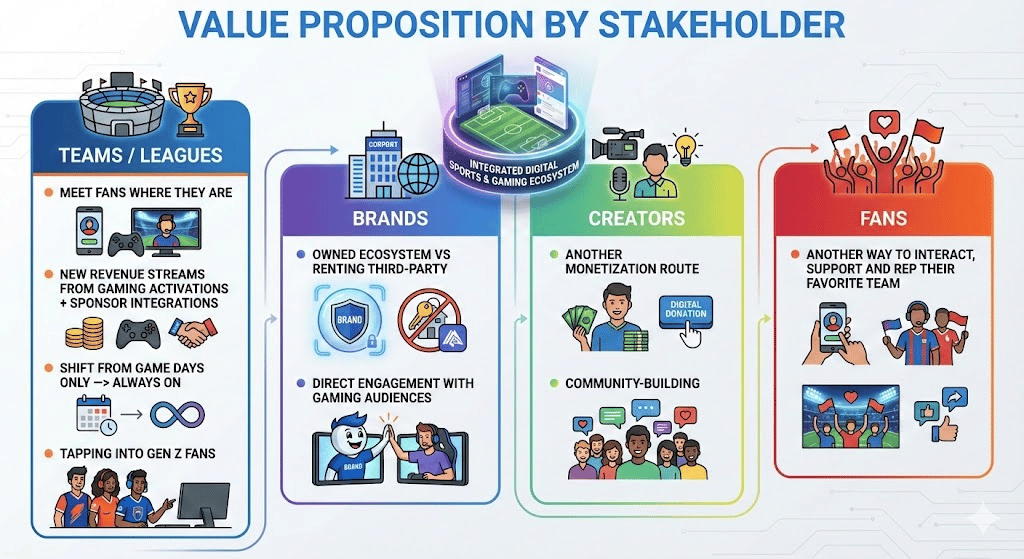
Value proposition breakdown
Traction:
12+ customers (New Balance, MLS, New York Giants, and more)
New Balance x NBA2K Campaign

Near 7-figure ARR
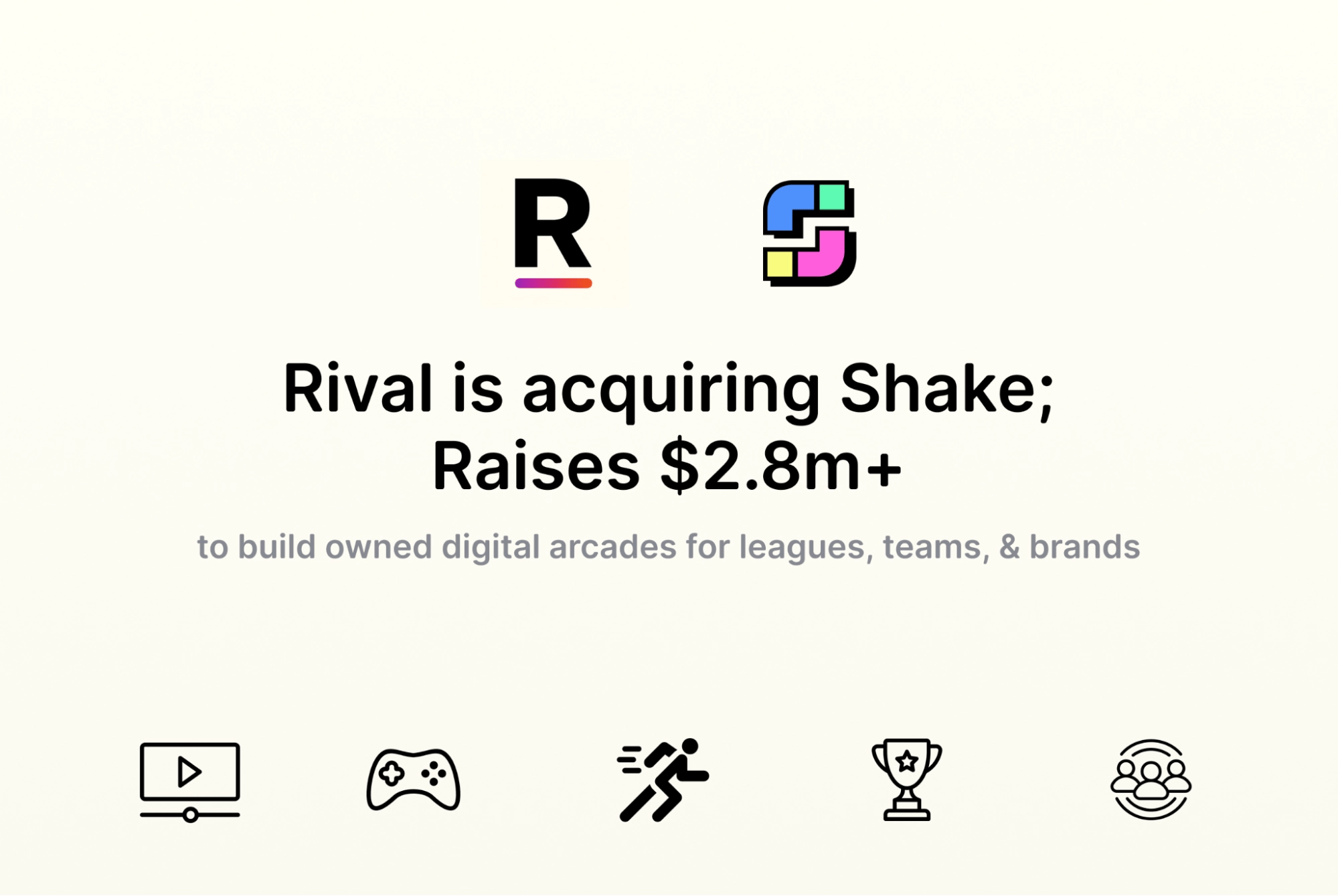
Rival acquired Gen-Z focused social gaming platform Shake to bolt-on lightweight daily prediction contests into Rivals existing infrastructure for teams, leagues and brands.
The combined stack now lets partners own even more of the fan experience and funnel from quick social plays to long-form competitions, all leading to richer first-party data.
Deep Dive:
Pros:
Combination of enormous (and growing) markets: gaming, sports and creators
Solves enterprise pain points, especially around engagement and tapping into Gen-Z fans
An opportunity to own your gaming strategy, not rent it
Example: Detroit Pistons made a push to increase fan engagement in the gaming world by partnering with Rival to create the Motor City Rivals, letting fans compete across gaming and esports for prizes and team-rewards.
This allowed the Pistons to run branded tournaments across titles like Fortnite, Rocket League and NBA 2K, which drove:
200k in revenue via ticket sales through the Rival platform
78% of Motor City Rivals community was net new to the Pistons internal CRM
Largest community on Rival, built through consistent programming and engagement
Meet users where they are: playing games
Create an engagement strategy that works year-round
Monetize a new digital surface area
Example: Rival powered a first-of-its kind activation between the Detroit Lions and Ninja
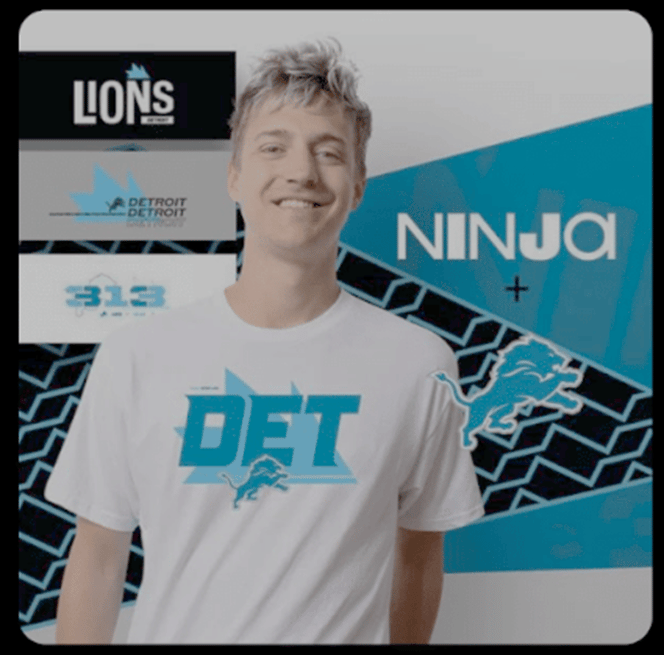
The tournament offered fan prizes, tickets and meet-ups
The result: Higher engagement, Gen-Z interest and a natural connection between fandom and gaming
Extremely strong unit economics for both Rival as a business and their customers
Cons:
Land of the unknown: As a first-mover, Rival has to prove the concept out to customers in an industry that has traditionally been backwards-looking
Client concentration: Starting to sign more logos to diversify the revenue base, just a matter of time


📶The Signal (No Huddle’s Take):
Rival is leading a structural shift that is well underway: online gaming has become a dominant entertainment pillar within the sporting ecosystem. Teams and leagues are slowly starting to realize this, and Rival’s white-labeled platform flips gaming communities into engagement and revenue drivers that didn’t exist before. What excites me most about Rival comes down to two things: the management team and the early traction.
The management team is well-positioned for continued success, combining decades of sports and brand knowledge with a proven track record building gaming products. Matt led Rival from a strategic seat before stepping into the CEO role, giving him a unique lens into the story and future of the business that a lot of companies do not have. He has also had stops across the sports, brand, and rightsholder world, which is a huge value-add when it comes to cracking into these industries. In addition, Jack brings a wealth of experience to the ops side of the house, having scaled a business and product through an acquisition with Shake. I absolutely love — and couldn’t agree more with Jack’s quote to SBJ: “15 years ago, every sports team needed a social media strategy; 10 years ago, they needed content; five years ago, they needed influencers; and now they need gaming. Properties typically want ownership of the offerings, which is why Rival (and Shake now, too) work in the B2B2C space.” To round it out, CTO Spencer helped co-found Shake and brings the technical expertise needed to properly entrench Rival in this space.
On the traction front, Rival has already partnered with tier-one logos and shown clear product-market fit. From marquee brands to teams to leagues, Rival is just starting to emerge as a star in the space. The best part of Rival’s work is that the proof is in the data: those that step into this “new” gaming world immediately reap the rewards and power of the Rival community.
Take MLS for example. The league wanted to strategically roll out its eMLS Open Qualifier in a way that actually drove real-world MLS fandom and engagement, so it tapped Rival to execute. The results: a younger audience, sold-out demand (all 12 tournaments filled within 24 hours of announcement), and strong conversion (73% of community members also watched the MLS Cup). That's direct impact to the bottom line, and it’s strengthened the connection between MLS and its growing fan base.
I see a direct and clear path for Rival to become the infrastructure layer for gaming as a marketing and revenue channel for brands, teams, and leagues. With already strong retention rates and a growing customer base, I’m excited to see a big surge in 2026 for the Rival team.
If you are interested in learning more about Rival or want to speak directly with the management team, please respond to this email or reach out directly to [email protected]
No Huddle is for informational purposes only and is not financial or business advice. The content in this newsletter does not represent the opinions of any other person, business, entity, or sponsor.